
Metal roofs bring impressive durability and a modern look, which are two big reasons why homeowners choose them when they want a long-lasting solution. It’s easy to think the smooth surface of metal means winter won’t cause problems. Still, ice dams deserve your attention. Even though the risks with metal roofs are different than those with asphalt shingles, ice dams can happen, and it pays to know what to watch out for.
How Do Ice Dams Form on Roofs?
Ice dams look like ridges of ice at the edge of your roof. When snow melts on the warm upper part of the roof and runs down, the water meets the cold edges and freezes again. This process repeats until the ice builds a dam, stopping water from draining off the roof.
Temperature differences between the attic and roof are at the heart of this problem. When attic insulation falls short, or the space lacks proper ventilation, heat escapes and warms the roof deck from below. Cold spots near the eaves, combined with sun exposure or fluctuating outdoor temperatures, all play a role in starting this cycle.
Why Are Metal Roofs Less Prone to Ice Dams?
With metal roofing, snow and ice naturally slide away thanks to a slick surface. Compared to the rough texture of shingles, metal clears itself much more easily, so the chance of snow building up and turning into a dam drops.
Many new metal roofs include a “cold roof” setup. This means venting under the panels keeps the whole system closer in temperature to the outdoors. Consistent airflow helps stop heat from escaping to the roof’s surface and prevents constant melting and refreezing.
What Conditions Lead to Ice Dams on Metal Roofs?
Even the best metal roof can fall prey to ice dams if certain conditions line up. Severe storms followed by quick temperature drops set up an ideal situation for ice to collect.
Roofs with a shallow pitch don’t shed snow as well as steep ones. Rooflines with lots of valleys, dormers, or unusual angles create pockets where snow piles up. Places like these are often where melting water collects and then freezes when it can’t drain away, beginning the damming process.
How Does Roof Pitch and Design Change Ice Dam Formation?
The slope of your roof makes a real difference. Metal roofs with a steep pitch clear snow and ice quickly, with gravity doing most of the work. Flat or low-slope roofs, on the other hand, tend to hold snow longer, which increases the risk.
Complex roof designs also create trouble spots. Valleys and corners catch deep snow, while features like skylights and chimneys lead to warm patches that melt snow and send runoff toward colder areas that can freeze.
How Can You Spot Ice Dams on a Metal Roof?
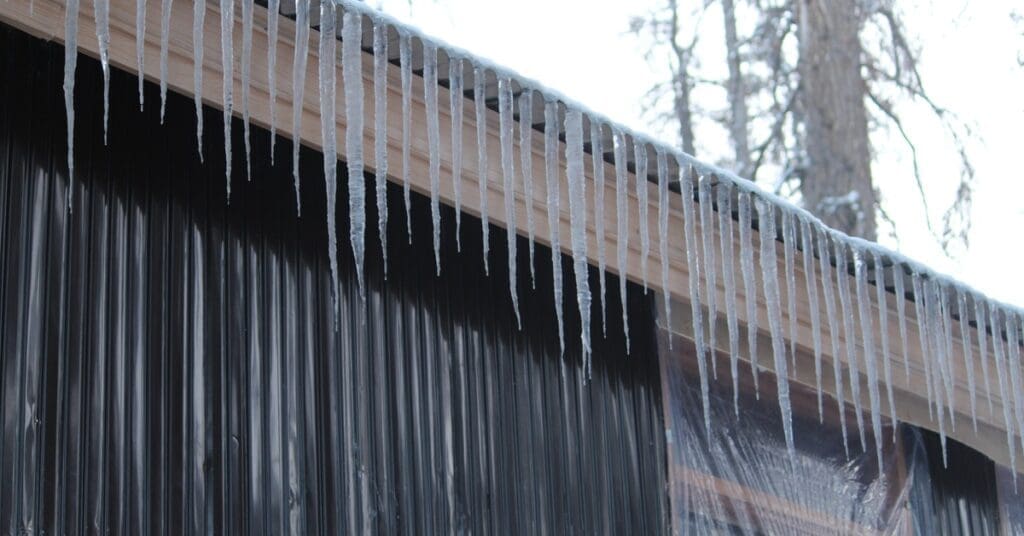
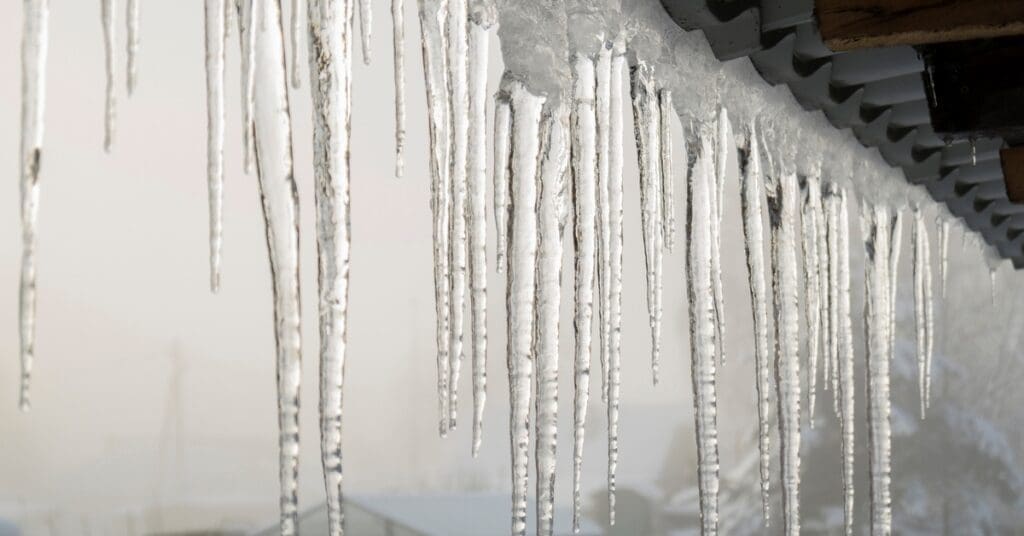
Signs of an ice dam on a metal roof are easy to spot if you know what to look for. Look for ridges of ice along the lower edge of your roof. Long or thick icicles hanging from eaves or gutters mean water isn’t draining as it should.
Indoors, keep an eye out for water stains or discoloration on ceilings and walls, especially near outside-facing areas. Damp insulation or peeling paint in the attic can signal that water has gotten in, often thanks to an ice dam pushing water beneath the roofing.
What Are the Unique Risks of Ice Dams on Metal Roofs?
Ice dams can challenge metal roofs in specific ways. Metal panels keep water out on their own, but a dam can push water up under seams, flashing, and fasteners. Once this water slips below the metal panels, it can reach the roof deck or insulation, sometimes causing leaks indoors.
Ice weighs more than most people think. When a heavy ice dam forms, it can stress gutters, fasteners, and the roof’s edge. Gutters might bend or even separate from the house, which opens the door to more damage and poses safety concerns if the ice drops suddenly.
How Does Proper Installation Help Prevent Ice Dams?
An expertly installed roof stands as your home’s best line of defense. Qualified contractors use materials and methods designed for harsh winters, from high-quality insulation to continuous ridge and soffit vents that keep things balanced.
Professionals make sure flashing around chimneys, valleys, and vents is tight, so water can’t sneak under panels. Many also use a self-sealing, high-temperature ice and water barrier on critical areas, including valleys and eaves. This backup protection keeps water from getting through, even if ice starts to accumulate.
Do Heat Cables Fix Ice Dam Problems for Good?
Heat cables—the thin, electric lines that run along your roof’s edge—can sometimes melt channels in ice dams. They might open up small gaps for water to flow off, but this approach only solves part of the problem and not for the long term.
Heat cables use a lot of electricity, bumping up your utility bills in winter. They target the symptom (ice) and not the source (warmth escaping from the house or attic). In most cases, a professional roof installation and insulation work better than relying on a short-term fix year after year.
What’s the Best Way to Remove Ice Dams Safely?
If you spot an ice dam or suspect trouble, resist the urge to chip away at it with sharp tools. You might scratch coatings, dent metal panels, or rip gutters off in the process. Chemical deicers pose their own dangers, as salt or harsh chemicals can corrode metal and discolor your finish.
The safest and most effective approach uses a low-pressure steamer designed for roofs to gently melt away the ice without harm. If the problem looks serious or you suspect water is getting inside, reach out to an experienced roofing company offering ice dam removal services. These professionals handle ice the right way, protecting your home and your roof during the process.
How Can You Stop Ice Dams on Metal Roofs?
Winters in Wisconsin can be tough, but you can outsmart ice dams with smart upgrades and simple maintenance. Focus on these key steps:
- Upgrade Attic Insulation: Seal any gaps and make sure your insulation meets or beats recommended R-values to keep heat out of the attic.
- Improve Roof Ventilation: A balanced system with ridge and soffit vents keeps air moving, so the roof temperature matches the outdoors.
- Add Snow Guards When Needed: These devices slow down snow slides, especially on steep roofs, making sure large sheets don’t crash down without warning.
When you combine these precautions, you cut down the chances of serious ice dam problems. Taking care of your roof before winter hits brings peace of mind, safeguards your home’s value, and keeps everything inside dry and comfortable. Whether you should worry about ice dams on a metal roof depends largely on your home’s setup and your commitment to prevention.
When Should You Call a Roofing Professional?
Your roof protects your home from everything the winter throws at it—snow, ice, and below-zero temperatures. If you’re worried about ice dams or want a roofing expert’s opinion, reach out to a team that cares as much about your home’s longevity as you do.
Contact A-Rite Construction for an expert inspection and honest answers. Our experienced professionals put you and your home first, ensuring you stay dry, comfortable, and confident, no matter how harsh the winter gets.