Why Are My Windows Drafty? Here Is What Is Likely Happening
If you are wondering why are my windows drafty, you are not alone. It is one of the most common comfort complaints from homeowners, especially during cold Wisconsin winters. The short answer is that cold air is finding a gap somewhere around your window, or your window glass is cold enough to create a chill even without a true air leak.
The most common reasons windows feel drafty:
- Worn or damaged weatherstripping around the sash (the moving part of the window)
- Cracked or missing caulk between the window frame and the wall
- Poor insulation packed around the window during original installation
- Warped or aging window frames that no longer seal tightly
- Failed seals in double-pane glass, reducing insulation performance
- Cold glass surfaces creating convection currents that feel like moving air
Any one of these can make a window feel drafty, and sometimes more than one is happening at the same time.
The good news: most drafty windows can be diagnosed and fixed without a full window replacement. This guide will walk you through how to find the source, what to do about it, and when it makes sense to repair versus replace.
I'm Bryan Londerville, founder of A-RITE Exteriors, and I have spent more than two decades helping Central Wisconsin homeowners figure out why are my windows drafty and how their windows, insulation, and exterior systems work together to keep their homes comfortable. If you want to understand what is happening at your windows before you spend money on a fix, this guide is a good place to start.
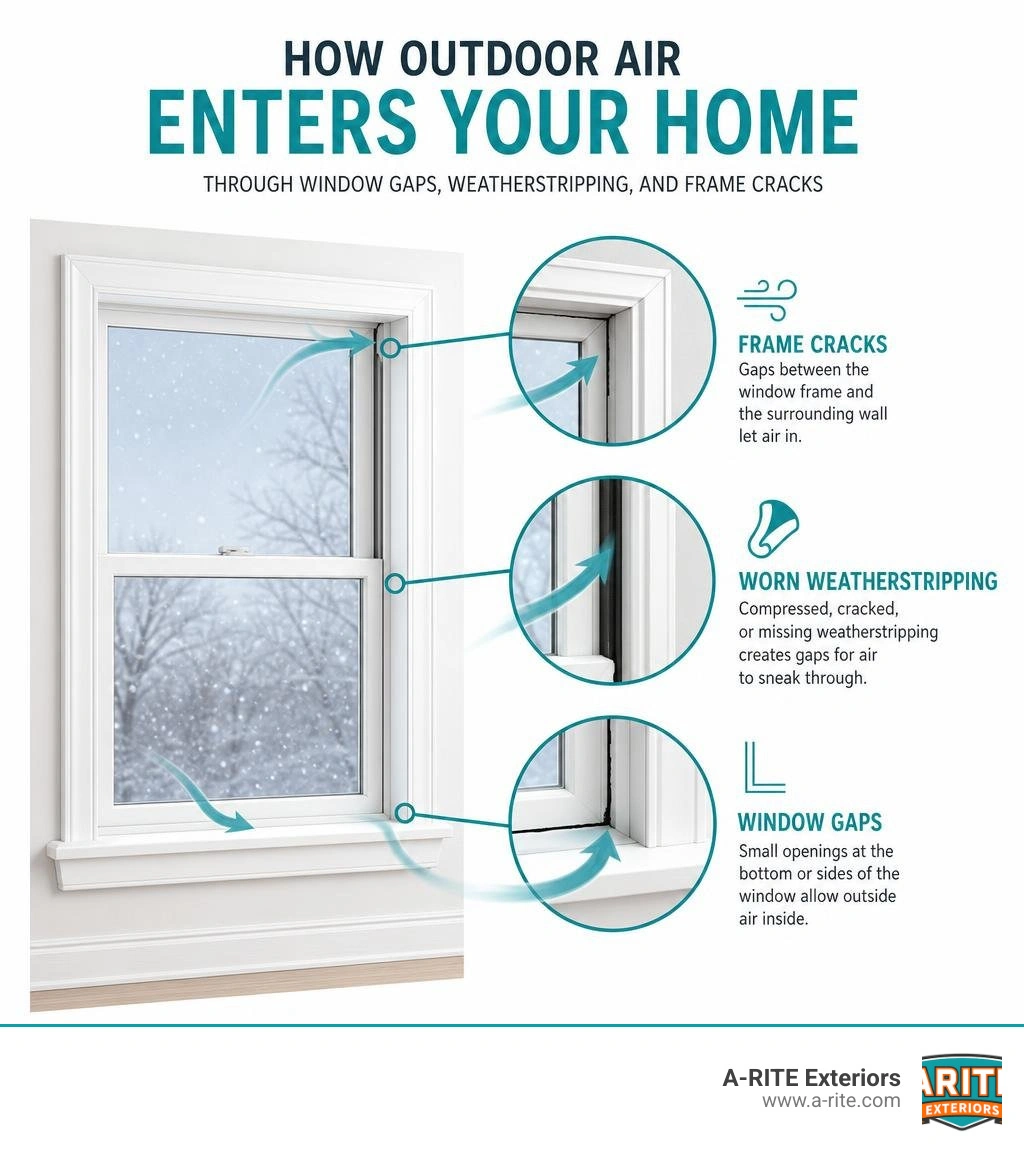
Understanding Why Are My Windows Drafty: Air Leakage vs. Convection
When you sit near a window on a chilly evening in Wausau or Stevens Point and feel a cold breeze, your first instinct is probably to blame a physical gap in the glass. However, what you are feeling might not actually be outside air sneaking indoors. To solve this mystery, we have to look at the differences between true air leakage and a physics process called convection.
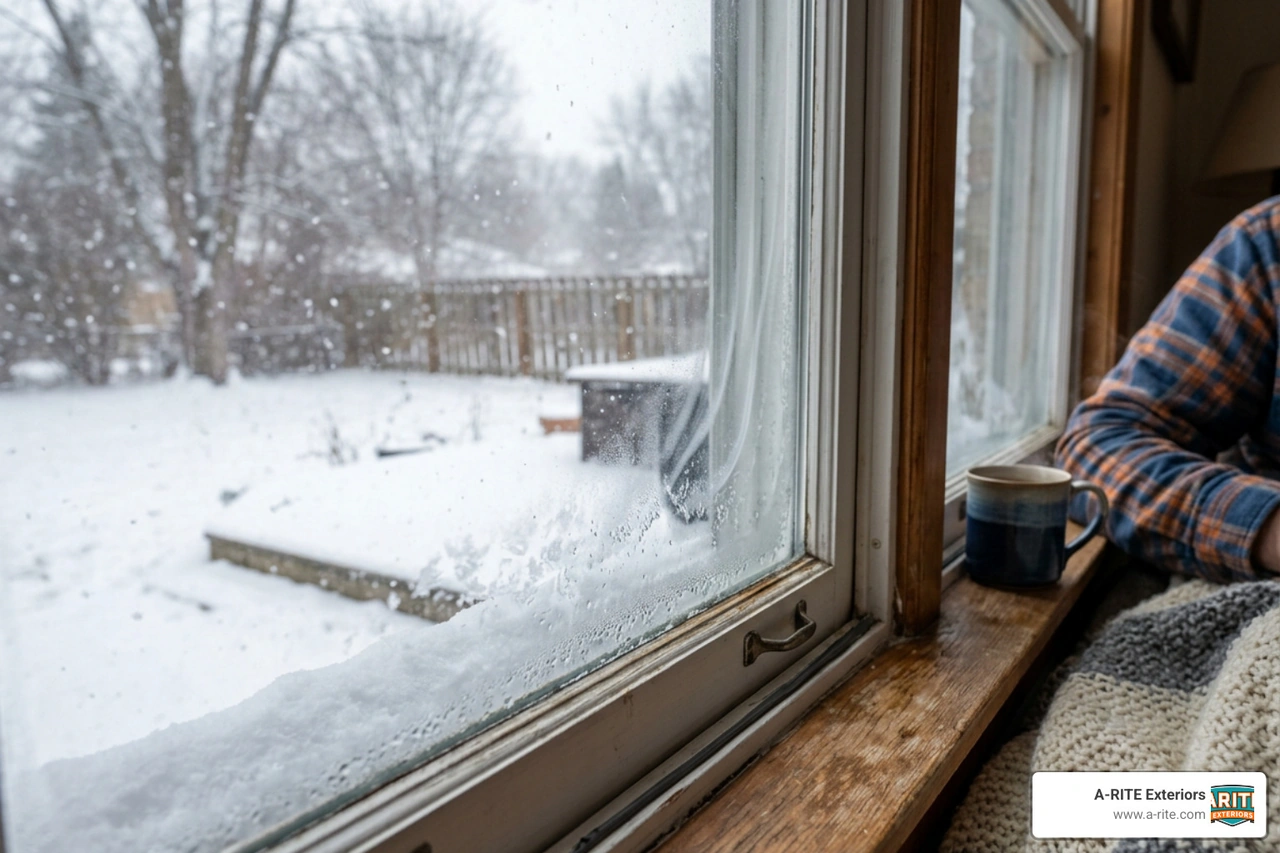
Is it actual air leakage or just cold glass?
True air leakage occurs when there is a physical pathway from the outside of your home to the inside. This happens when caulk cracks, weatherstripping wears down, or the window frame warps, which allows cold outdoor air to blow directly into your living space.
Convection, on the other hand, is a completely different animal. It does not require any holes or cracks at all. Convection is simply the movement of air caused by temperature differences.
Here is how it works:
- The air inside your home is warm and comfortable.
- The glass on your window is cold because it is exposed to the freezing Wisconsin winter outside.
- When the warm indoor air touches that cold glass, it cools down quickly.
- Because cold air is denser and heavier than warm air, this newly cooled air sinks rapidly to the floor.
- As that cold air falls, it pulls more warm air toward the window to take its place, creating a continuous loop of moving air.
This falling air can feel like a draft, even if your window is sealed tightly.
The glass type plays a major role here. Single-pane glass has higher thermal conductivity, meaning heat passes through it more easily. It offers less resistance to cold temperatures than multi-pane options. Double-pane glass, which has a sealed space between two layers of glass, acts as a buffer to slow down this heat transfer.
To learn more about how different materials resist heat flow, you can read about What R-Value Means and Why It's Important for Insulation. If you want to dive deeper into the general causes of home drafts, check out this guide on Why Is My House Drafty? | ENERGY STAR. For details on how modern window designs address these issues, you can explore our More info about window services.
The stack effect and how it pulls cold air inside
Your home is a connected system, and sometimes a drafty window is actually a symptom of an issue elsewhere in the house. This is due to a phenomenon known as the stack effect.
During the winter, the warm air inside your home is lighter and more buoyant than the cold outdoor air. This warm air naturally rises to the top of your house. If you have gaps in your attic hatch, ceiling penetrations, or light fixtures, that warm air escapes into the attic.
When warm air escapes out the top of the house, it creates a pressure difference (negative pressure) in the lower levels. Your home tries to balance this pressure by pulling cold outdoor air inside through any opening it can find, including the foundation, doors, and basement rim joists. This pressure difference also puts extra stress on your window seals, pulling cold air through even the smallest gaps around your window frames.
Addressing attic insulation and air sealing is often a helpful step to reduce the overall stack effect in your home. For example, R-49 to R-60 is a common insulation recommendation for Wisconsin attics to help keep heat from escaping. You can learn more about how attic systems protect your comfort by visiting our page with More info about insulation services.
How to Diagnose Window Drafts in Your Home
Before you start applying caulk or shopping for replacements, you need to identify exactly where the cold air is entering. Pinpointing the source of the draft prevents you from wasting time and money on the wrong fixes.
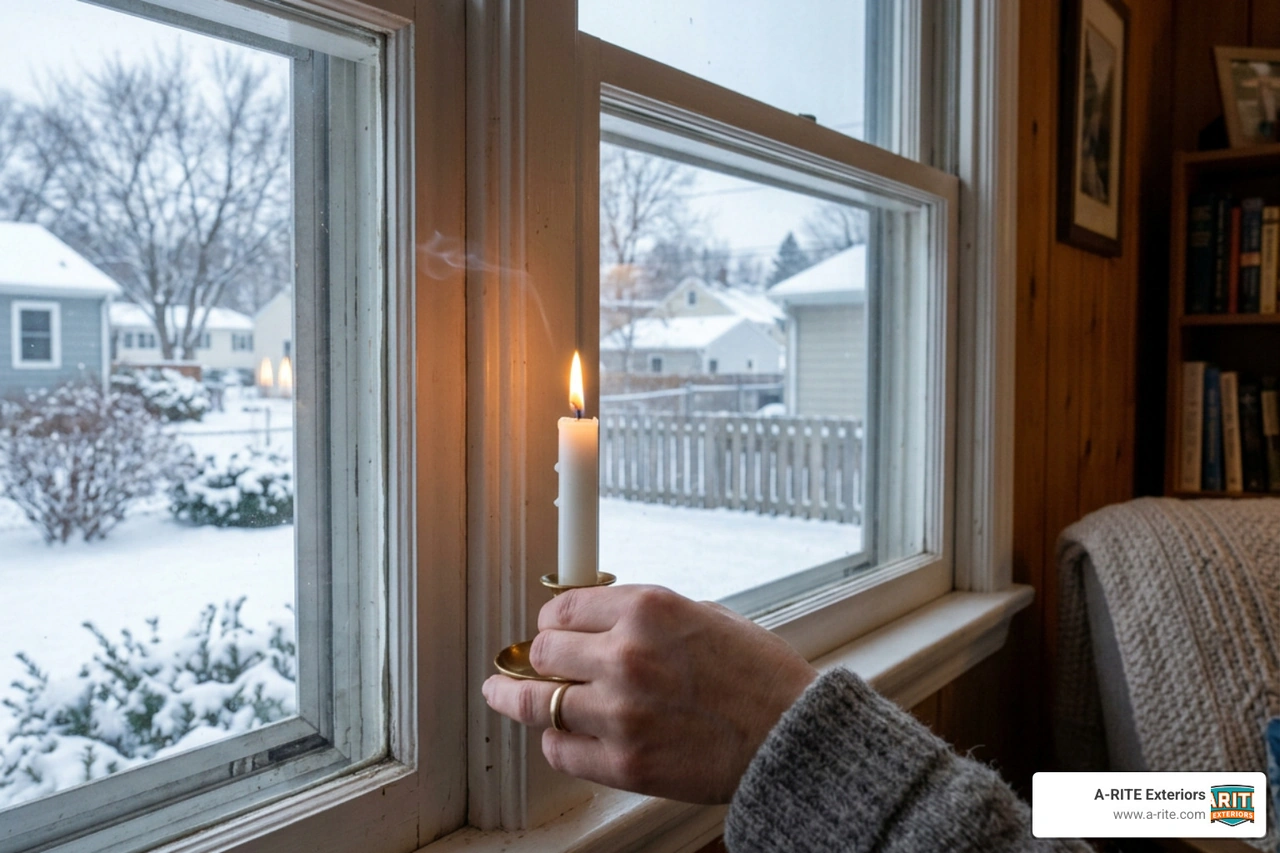
Simple DIY tests to find why are my windows drafty
You do not need expensive equipment to start your investigation. Here are three simple tests you can perform on a windy day:
- The Candle or Incense Test: Light a candle or an incense stick and hold it close to the window frame, the meeting rails, and the edges where the window meets the wall. Move it slowly. If the flame flickers or the smoke begins to swirl horizontally, you have found an active air leak. Be sure to keep the open flame away from curtains or blinds.
- The Tissue Paper Test: Take a single sheet of tissue paper or toilet paper and hold it by the corner near the window joints. If the paper bends or flutters, air is pushing through.
- The Damp Hand Test: Lightly wet your hand with water and run it slowly along the perimeter of the window. Your skin is highly sensitive to temperature changes when wet, making it easier to feel tiny streams of cold air.
For a step-by-step walkthrough on executing these tests safely, you can refer to this guide on How to Fix a Drafty Window (Stop Cold Air and Save on Energy Bills) | Practical Home Guides.
Professional diagnostic tools
If DIY tests do not yield clear results, or if you suspect hidden gaps behind your interior trim, professional diagnostic tools can provide a complete picture of your home’s energy loss.
A professional home energy audit often includes a blower door test. This test involves placing a powerful fan in the frame of an exterior door to pull air out of the house, lowering the indoor air pressure. This forces outdoor air through all existing cracks and leaks, making drafts highly noticeable and easy to measure.
Auditors also use infrared cameras (thermal imaging) during the test. These cameras show temperature variations as different colors. A drafty window frame or an uninsulated wall cavity will show up as bright blue or purple, indicating cold spots where outdoor air is bypassing your home's thermal barrier.
Common Causes of Drafty Windows
Over time, daily operation and seasonal weather shifts take a toll on your windows. In regions like Central Wisconsin, where temperatures swing from warm summers to freezing winters, materials expand and contract constantly. This movement leads to several common issues.
To explore how the federal government recommends identifying these issues, take a look at the guide on Detecting and Air Sealing Window Leaks | Department of Energy.
Window type and draft susceptibility
The style of window you have plays a significant role in how well it resists air infiltration. Different designs utilize different sealing mechanisms:
- Double-Hung and Single-Hung Windows: These are popular traditional styles, but they are historically the most susceptible to drafts. They rely on sliding sashes, and the meeting rail (where the two sashes lock in the middle) is a common failure point for seals.
- Sliding Windows: Similar to hung windows, sliders move along a track. Over time, dirt can build up in the tracks, or the sashes can fall out of alignment, preventing a tight seal.
- Casement and Awning Windows: These windows are generally much more draft-resistant. They open outward on hinges and use a crank mechanism. When you close and lock a casement window, the sash is compressed tightly against the weatherstripping around the entire frame, creating a very secure seal.
- Fixed (Picture) Windows: Because they do not open, fixed windows have no moving sashes or operable joints. This makes them the most airtight window style available.
Installation issues that explain why are my windows drafty
Even the most expensive, high-performing window can fail to keep out the cold if it was installed poorly. Common installation errors include:
- Improper Flashing: Flashing is the protective barrier installed around the exterior of the window frame to direct water and wind away. If flashing is missing or damaged, air and moisture can easily bypass the window frame.
- Poor Insulation Around the Frame: When a window is placed into the rough opening of a wall, there is always a small gap around the perimeter. Installers must seal this gap with low-expansion spray foam or specialized insulation. If this step is skipped or done poorly, cold air will flow freely behind your interior trim.
- Window Alignment Issues: If the window frame is not perfectly level, plumb, and square, the sashes will not sit correctly in the frame. This prevents the locks from pulling the window closed tightly, leaving visible gaps.
To learn more about how windows are rated for wind and air resistance, read about Understanding Window Performance Ratings | ENERGY STAR.
How to Fix Drafty Windows: DIY vs. Professional Solutions
Once you know where the cold air is coming from, you have to decide whether to tackle the project yourself or call in professional help.
| Fix Type | Project Scope | Estimated Longevity | Comfort Gain |
|---|---|---|---|
| DIY Weatherstripping | Replacing foam or felt seals on sashes | 5 to 10 years | Low to Moderate |
| DIY Caulking | Sealing stationary exterior/interior frame gaps | 3 to 5 years | Moderate |
| DIY Window Film | Applying plastic shrink wrap over the glass | 1 season (temporary) | Moderate (helps reduce convection) |
| Professional Reconditioning | Replacing tracks, hardware, and deep seals | 10+ years | Moderate to High |
| Professional Replacement | Installing new energy-efficient units | 20 to 50+ years | High |
Temporary DIY fixes for quick relief
If you need to stop drafts immediately but are not ready for a permanent change, there are several budget-friendly DIY options:
- Rope Caulk: This is a non-hardening, clay-like caulk that comes in rolls. You can press it into gaps around window sashes using your fingers. It is easy to peel off in the spring when you want to open your windows again.
- Shrink Wrap Film: Window insulation kits are inexpensive and can help reduce convection currents. You apply double-sided tape to the window trim, press the plastic film onto the tape, and use a hair dryer to shrink the plastic until it is tight and clear. This creates a pocket of still air that acts as an extra layer of insulation.
- Thermal Curtains: Hanging heavy, insulated drapes can block falling cold air from spilling into your room. Keep them closed on cold nights and open them on sunny days to let natural solar heat warm your home.
If you decide to work on insulation or sealants around your home, be sure to review our Safety Tips for Homeowners Working with Insulation to protect yourself during the process.
When to choose professional repair or replacement
DIY fixes are excellent temporary solutions, but they cannot fix structural damage. You should consider calling a professional contractor if you notice:
- Rotted Wood: If your window frames or sills are soft, crumbling, or showing signs of wood rot, the structural integrity of the window is compromised.
- Failed Glass Seals: If you see fog, condensation, or mineral staining between the two panes of glass, the sealed insulated glass unit (IGU) may have failed. The insulating gas can escape, which can reduce the window's energy efficiency.
- Severe Warping: If a window sash is warped so badly that it will not close fully or lock securely, temporary sealants will not solve the underlying issue.
When you need an experienced local contractor to evaluate your home's exterior, you can learn about Who Can Help with Roofing, Gutters, Siding, Windows and Insulation Near Me.
Frequently Asked Questions about Drafty Windows
Are new windows always completely draft-free?
Not necessarily. Even a premium, high-end window will let in cold air if it is installed incorrectly. That is why it is so important to understand the difference between warranties:
- Manufacturer Warranties: These cover defects in the window materials themselves, such as a failed glass seal or cracking vinyl. They do not cover issues caused by poor installation.
- Workmanship Warranties: These are provided by your installation contractor and cover issues related to how the window was installed, such as drafty frames, poor alignment, or improper flashing.
Always ask your contractor for proof of licensing, insurance, and written warranty details before any work begins.
How much energy can I save by fixing drafty windows?
According to the U.S. Department of Energy, heat gain and loss through windows can contribute to residential heating and cooling energy use. Additionally, the EPA estimates that homeowners can save on heating and cooling costs by air sealing and adding insulation in key areas like attics, crawl spaces, and basement rim joists. While sealing windows alone is just one step, combining window repairs with proper attic insulation is a practical way to help lower your heating bills.
What is the difference between double-pane and triple-pane windows?
Double-pane windows feature two layers of glass with a sealed space in between, which is typically filled with insulating argon gas to slow down heat transfer.
Triple-pane windows add a third layer of glass, creating two separate insulating gas spaces. This can lower the window's U-factor (the measurement of heat transfer; a lower U-factor generally indicates better insulation).
While triple-pane windows can offer enhanced insulation and noise reduction, they do come with a higher initial price tag. For many homeowners in Central Wisconsin, a high-quality double-pane window with low-E coatings and argon gas provides a balance of performance and comfort.
Conclusion
Determining why are my windows drafty is the first step toward reclaiming your home's comfort and protecting your heating budget. Whether your windows simply need a fresh bead of caulk, new weatherstripping, or a complete upgrade, addressing these drafts makes a noticeable difference in how your home feels during a cold Wisconsin winter.
At A-RITE Exteriors, we take a roof-first, whole-home approach to exterior remodeling. Serving communities across Central Wisconsin, including Wausau, Stevens Point, Schofield, and Minocqua, we help homeowners build weather-resistant systems designed to stand up to our local climate.
If you are ready to stop guessing where that cold air is coming from, we are here to help. Schedule a window consultation with our team today, and Trust the Hawk on Your Block.